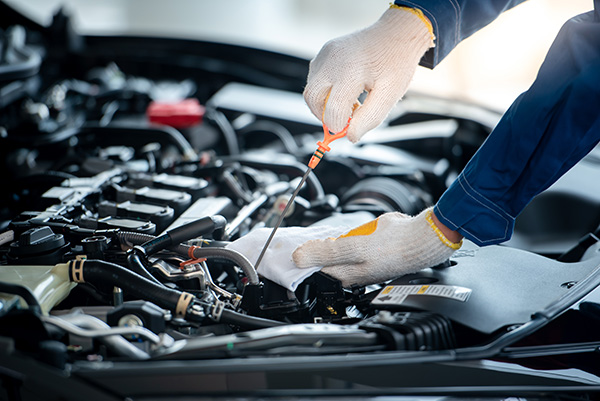
It’s frustrating to check the dipstick and see the oil level dropping when there’s no puddle under the car. A lot of engines can use oil in ways that never hit the ground, so it feels like it’s disappearing. The good news is there are a handful of common causes, and most of them leave clues if you know what to watch for.
Oil loss between services is also one of those problems that can start small and slowly become your new normal. If you catch the pattern early, you can usually prevent bigger messes, plug fouling, or a low-oil warning that shows up at the worst time.
Oil Loss Without A Puddle Is Common
No visible leak does not automatically mean nothing is wrong. Oil can burn inside the engine, seep onto hot surfaces and evaporate, or leak only while you’re driving when air pushes it away from where you’d normally see it. Sometimes the oil is escaping, but it’s spreading across a shield or undertray instead of dripping to the ground.
We see this a lot on vehicles that do mostly highway miles. The engine stays hot for long stretches, and tiny seepage points can bake off before they ever leave a stain on your driveway. That’s why the absence of a puddle is not a reliable pass or fail test.
How Engines Burn Oil Without Leaking
Oil consumption usually comes down to oil getting past seals that separate the crankcase from the combustion chamber. Worn piston rings are one path, especially on higher-mileage engines. When rings lose their sealing ability, oil can slip past and burn during normal driving, often without smoke you can easily spot from the driver’s seat.
Valve stem seals are another common path. When those seals harden, oil can drip down the valve guides and burn during startup or after idling. If you notice a brief puff of smoke after the car has been sitting, that pattern can fit valve seal wear, even if it clears quickly.
PCV System Problems And Crankcase Pressure
The PCV system helps pull vapors out of the engine and keeps crankcase pressure under control. When it clogs, sticks, or runs the wrong way, pressure can build and push oil into places it should not go. That can lead to oil getting pulled into the intake and burned, or oil being forced past seals that were otherwise doing fine.
It can also create secondary symptoms like oil residue in the intake tube, a rougher idle, or new seepage at gaskets that used to stay dry. A PCV issue is often overlooked, but it’s a smart first check because it can mimic more significant engine wear if ignored.
Turbochargers, Seals, And Hidden Consumption
If your vehicle is turbocharged, oil consumption can show up in a more sneaky way. Turbos rely on oil for lubrication, and when seals or bearings start wearing, oil can enter the intake or exhaust side and burn off. Sometimes you’ll notice more oil use during highway driving or after long pulls uphill, when the turbo is working harder.
You might not see dripping because the oil is being carried and burned, not leaking onto the ground. A mild turbo oil seep can also coat intercooler pipes and collect in low spots, which makes the issue feel intermittent. This is one reason regular maintenance checks should include looking for oil residue where it doesn’t belong, not just watching for spots on the driveway.
External Leaks You Might Not Notice
Some leaks are real, but they’re easy to miss. Oil filter housing gaskets, valve cover corners, and front timing cover areas can seep just enough to make a mess that never drips. If oil lands on the exhaust or a hot shield, it can burn off and leave only a faint smell, usually after parking.
Airflow also hides leaks. Oil can blow backward while you drive and coat the underside, then collect dust until everything looks uniformly dirty. A small leak can disappear into that grime for months, so cleaning the area and rechecking later is often the quickest way to confirm where it’s coming from.
What You Can Check Between Oil Changes
Start by tracking how fast the level drops. Check the oil on level ground, at the same time of day when possible, and write down the mileage and dipstick reading. If you add oil, note how much and how many miles you went before it needed more. That pattern helps separate normal use from a problem that’s accelerating.
Also pay attention to changes you can feel. A new oil smell after driving, a rough idle that wasn’t there before, or spark plugs that foul sooner than expected can all connect back to oil getting where it should not. If you’re topping off often, schedule an inspection so the cause can be corrected instead of just keeping the level afloat.
Get Engine Oil Loss Service In Houston, TX, With Space Center Automotive of Clear Lake
If you’re adding oil between changes and you want it fixed correctly, the next step is to book service so the source of the oil loss can be repaired before it leads to bigger engine and emissions problems.
Schedule service or visit Space Center Automotive of Clear Lake in Houston, TX to stop the oil loss, protect the engine, and keep your maintenance schedule from turning into constant top-offs.