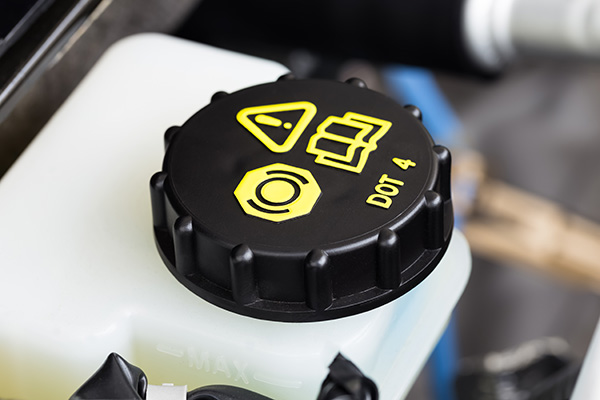
A lot of drivers think about engine oil and brake pads, but almost never think about the fluid that actually moves the brakes. Brake fluid works quietly for years, then one day the pedal feels softer, the light comes on, or a line rusts out. Since this fluid literally transfers the force that stops your car, it deserves more attention than it usually gets.
What Brake Fluid Actually Does When You Press the Pedal
When you press the brake pedal, you are not directly squeezing the pads with your foot. You are pushing a piston in the master cylinder, which pressurizes brake fluid in sealed lines. That pressure travels through the fluid to calipers or wheel cylinders at each wheel, clamping the pads against the rotors or shoes against the drums.
Because brake systems rely on pressure, the fluid has to be stable and incompressible. Fresh fluid gives you a firm, predictable pedal and consistent stopping power. As it ages and becomes contaminated, it starts to behave less like a clean hydraulic fluid and more like a tired, spongy liquid that does not respond the way it used to.
Why Brake Fluid Absorbs Moisture Over Time
Most modern brake fluids are labeled DOT 3, DOT 4, or DOT 5.1, and they are hygroscopic. That means they naturally absorb moisture from the air. Even though the system is sealed, tiny amounts of water work their way in through rubber hoses, seals, and the reservoir cap over time.
At first, the moisture content is low. As years go by, it slowly climbs. Water in the fluid lowers the boiling point, so under hard braking, the fluid can boil and form gas bubbles. Gas is compressible, which is the opposite of what you want in a brake system. That is a big reason manufacturers call for brake fluid changes based on time as well as mileage.
How Water in Brake Fluid Changes Pedal Feel
Moisture contamination usually shows up gradually. Early on, you might notice the pedal feels a little softer than you remember, or it sinks farther than it used to before the brakes really bite. In heavy traffic or on a long downhill, the pedal may get softer as the brakes heat up.
In severe cases, especially when towing or braking hard from highway speeds, overheated, moisture-laden fluid can boil. When that happens, the pedal can suddenly drop toward the floor with very little stopping power. Our technicians pay attention to any report of a “mushy” pedal or a pedal that changes feel after repeated stops, because those are classic hints that the fluid has seen better days.
Warning Signs Your Brake Fluid May Be Contaminated
You cannot see inside every part of the brake system, but the fluid itself gives you clues. Common warning signs include:
- Fluid in the reservoir that looks dark brown instead of clear to light amber
- A brake warning light or ABS light that appears along with changes in pedal feel
- Corroded bleeder screws or rusty metal lines under the vehicle
- Brake service records that do not show any fluid change for many years
If the fluid looks like old coffee or you cannot remember the last time it was changed, it is a safe bet that a flush is overdue. We often catch this during routine inspections, long before the driver notices anything unusual from behind the wheel.
Why Regular Brake Fluid Flushes Protect Critical Parts
Brake fluid does not just move pressure. It also protects internal metal surfaces from corrosion. Once enough moisture is mixed in, that protection fades, and rust can begin forming inside calipers, wheel cylinders, ABS components, and steel lines. That is when you start seeing sticky calipers, seized bleeders, and lines that corrode from the inside out.
A proper brake fluid flush replaces the old, moisture-laden fluid with fresh fluid that has a higher boiling point and better corrosion resistance. When we flush a system, we bleed each wheel until clean fluid comes through, not just top off the reservoir. That one service can extend the life of calipers, master cylinders, and ABS modules that are far more expensive than the fluid itself.
Smart Brake Fluid Habits for Everyday Drivers
You do not need to be a brake expert to keep this fluid in good shape. One good habit is simply looking at the reservoir when the hood is open for other reasons. If the level is low, you may have pad wear or a leak that deserves a closer look. If the fluid is dark, that is your quiet reminder to ask about a change.
It also helps to think in terms of years, not just miles. Many vehicles go a long time between brake fluid services because owners do not drive far, but moisture still creeps in as the car ages. Having the fluid tested or inspected every couple of years keeps you ahead of problems instead of waiting for a soft pedal to push you into the shop.
Get Brake Fluid Service in Houston, TX with Space Center Automotive of Clear Lake
If your brake pedal feels softer than it used to, your fluid looks dark, or it has simply been years since anyone mentioned a brake fluid flush, this is a good time to take care of it. We can inspect your whole brake system, test the fluid, and perform a complete flush so your brakes stay firm and responsive.
Schedule brake fluid service in Houston, TX with Space Center Automotive of Clear Lake, and we will help keep your stopping power strong every time you hit the pedal.